I'd replace the opening with: Managing multiple care services brings a different level of complexity…
What does a good rota look like in the care sector?
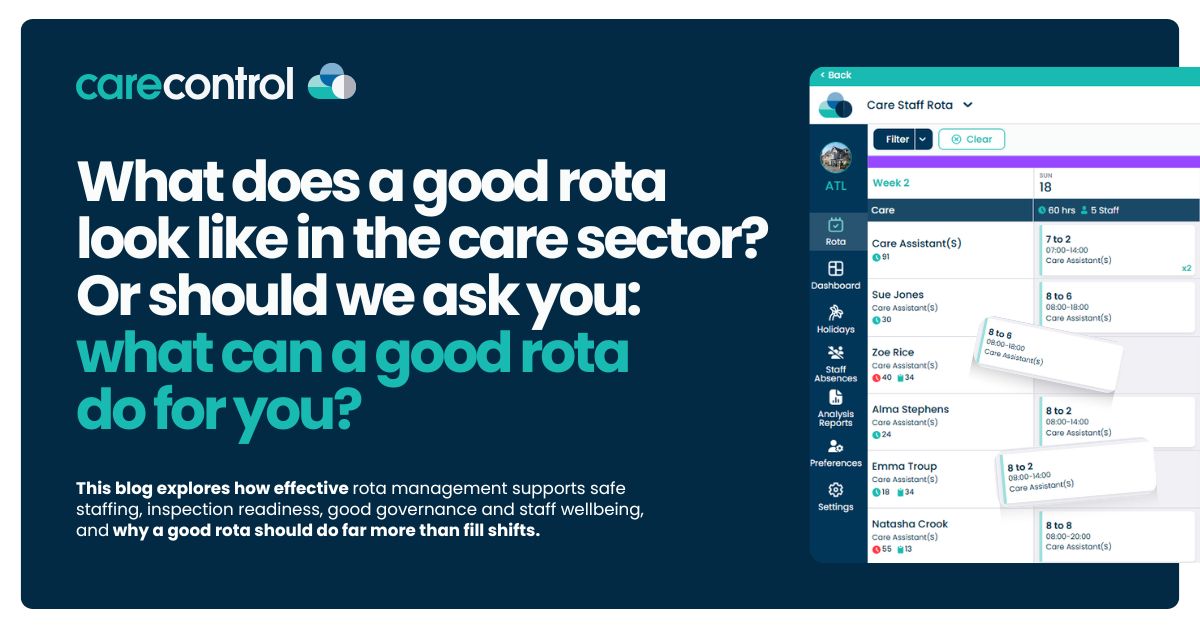
What does a good rota look like in the care sector? Or should we be asking a different question
Why rotas matter more than ever in the care sector
In the care sector, rotas are often viewed as an unavoidable administrative task. Something that needs to be completed, updated and shared, usually alongside everything else that comes with managing a service. Yet despite how routine they may feel, rotas play a critical role in the safe and effective running of any care setting.
Workforce pressures across adult social care continue to grow. Recruitment challenges, rising agency costs, increased sickness absence and greater regulatory scrutiny all place additional strain on providers. At the same time, expectations around safe staffing, governance and oversight have never been higher.
In this context, the rota is no longer just a schedule. It is a record of staffing decisions. It reflects how a service responds to changing needs. It shows whether staffing levels are planned, reviewed and adjusted appropriately. And during inspections, it often becomes one of the first documents used to understand how a service operates in practice.
Despite this, many providers are still relying on manual processes, spreadsheets or disconnected systems to manage their rotas. This not only increases the administrative burden but also introduces unnecessary risk.
What if the real question is what a good rota can do for you?
It is easy to frame the conversation around rotas as a checklist. Are shifts covered. Are staff allocated. Has it been shared. But this approach misses the bigger picture.
If you manage a care service, you already understand that a rota carries responsibility. Every staffing decision has an impact on the people you support, the wellbeing of your staff and your ability to demonstrate safe practice. You do not need to be told that staffing matters. You live that reality every day.
So instead of asking what a good rota looks like, it can be more useful to ask what a good rota enables you to do.
When a rota is working well, it supports safe care delivery, provides visibility and control, reduces administrative pressure and strengthens inspection readiness. It becomes a management tool rather than a source of stress.
Supporting safe, consistent care through effective rotas
At its core, a good care rota supports safe and consistent care. Staffing levels and skill mix should reflect the assessed needs of the people using the service, not simply minimum numbers or availability.
Inspectors expect providers to be able to demonstrate how staffing levels are planned and reviewed in line with people’s needs, as set out in safe staffing guidance for adult social care published by the Care Quality Commission.
Staffing aligned to assessed needs
Care needs change. Dependency levels fluctuate. Admissions, discharges and changes in health status all affect staffing requirements. A good rota allows managers to plan staffing based on these realities and adjust when necessary.
Rotas that clearly show how staffing decisions align with assessments make it easier to evidence that care is being delivered safely and appropriately.
Skill mix, continuity and dependency
Beyond numbers, rotas should support the right skill mix. This includes ensuring experienced staff are available, specialist skills are covered where required, and continuity is maintained where possible.
Consistency matters for people receiving care. Familiar staff improve outcomes, communication and trust. A good rota helps balance continuity with flexibility while still meeting service needs.
What inspectors look for when reviewing rotas
During inspections, rotas are often reviewed alongside care plans, incident records and staffing policies. Inspectors may look at historic rotas to understand patterns over time, not just current coverage.
Similar expectations are set out by regulators across the UK, including:
- Care Inspectorate Wales
- the Care Inspectorate in Scotland
- the Regulation and Quality Improvement Authority in Northern Ireland
Using the rota as evidence of good governance
Governance in adult social care is about oversight, accountability and assurance. A good rota plays a key role in demonstrating this.
During inspections, staffing information is often considered within the Well-led domain guidance published by the Care Quality Commission.
Demonstrating oversight and decision making
Rotas provide a record of how staffing is planned and managed. They show whether hours are monitored, whether overtime is controlled and whether staffing levels are reviewed regularly.
This visibility supports better decision making and allows managers to identify risks early, such as staff fatigue or over reliance on agency cover.
Rotas as part of your inspection evidence
When inspectors ask how you know your service is safely staffed, rotas should form part of the answer. They provide tangible evidence of planning, review and responsiveness.
Governance frameworks and inspection handbooks consistently emphasise the importance of clear records, oversight and evidence of decision making, particularly where staffing impacts care quality and safety.
Being confident answering safe staffing questions
Confidence comes from clarity. When rotas are accurate, accessible and up to date, managers are better equipped to respond to inspection queries without having to piece information together retrospectively.
Gaining visibility and control over staffing
Managing a care service requires constant balancing. Staffing levels, staff wellbeing, budgets and compliance all need to be considered at once.
Ongoing workforce pressures across health and social care, highlighted by NHS England, have made proactive staffing management increasingly important.
Monitoring hours worked and fatigue risk
Without clear oversight of hours worked, it can be difficult to identify patterns that may indicate fatigue or burnout. A good rota makes it easier to monitor working hours and address potential risks before they escalate.
Avoiding over and understaffing
Overstaffing impacts budgets. Understaffing impacts care quality and safety. A well managed rota helps strike the right balance by providing visibility across shifts and roles.
Managing change without losing oversight
Last minute changes are a reality in care. Sickness, emergencies and unplanned absences all happen. A good rota allows changes to be made quickly while maintaining control and visibility.
When rota management stops taking over your week
Rota management is time consuming. For many managers, it is one of the tasks that takes up the most time, often outside of normal working hours.
Moving away from spreadsheets
Spreadsheets may feel familiar, but they are prone to error, duplication and version confusion. They make it harder to track changes, monitor trends or provide audit trails.
Reducing duplication and manual updates
When rotas sit separately from other systems, information often has to be entered multiple times. This increases workload and the risk of mistakes.
Communicating rotas clearly and in good time
Clear communication supports staff wellbeing and planning. A good rota is communicated in plenty of time, updated clearly and accessible to those who need it.
Reducing the administrative burden of rota management does not diminish the importance of the task. It creates space for managers to focus on leadership, quality and staff support.
Why a good rota matters for your staff as much as compliance
Rotas affect staff experience directly. Poorly managed rotas can lead to dissatisfaction, disputes and increased turnover.
Accurate hours and pay
Accurate rotas support accurate pay. Clear records of hours worked reduce disputes and build trust between staff and management.
Transparency and trust
When rotas are transparent and consistent, staff are better able to plan their lives outside of work. This contributes to wellbeing and retention.
Enabling flexibility without chaos
Flexibility is important, but it needs to be managed. A good rota allows shift swaps and changes without losing oversight or creating confusion.
Why many providers are moving towards an all-in-one rota management
As care services become more complex, managing rotas in isolation becomes increasingly difficult.
Reducing reliance on multiple systems
Using separate systems for rotas, payroll and care delivery increases complexity. Information becomes fragmented and harder to manage.
Connecting rotas with care, payroll and compliance
An integrated approach supports better oversight and more informed decision making. It reduces duplication and improves accuracy.
Supporting better decision making
When staffing information sits alongside care and compliance data, managers have a clearer picture of how their service is operating.
A good rota as a leadership and governance tool
A good rota does not remove the challenges of managing a care service. Staffing pressures, regulatory requirements and operational demands remain.
But a well managed rota provides clarity, confidence and control. It supports safe care delivery, strengthens governance, reduces administrative pressure and improves staff experience.
If you are already doing everything you can to keep people safe, support your staff and remain inspection ready, your rota should be doing the same.
How digital care management can support better rota management
Managing rotas effectively is rarely about doing more. It is about having the right information in one place, at the right time, so staffing decisions are clear, justified and easy to evidence.
This is where an all in one digital care management system can quietly make a difference. By bringing rotas, care planning, staffing records and compliance information together, providers can reduce duplication, improve oversight and spend less time moving between systems.
Care Control’s digital care management platform supports this approach by helping care providers manage rotas as part of a wider picture of care delivery, governance and inspection readiness, rather than as a standalone task.
Fancy finding our a bit more? Click the button below!
Related Posts