Care technology has come a long way. Across the sector, digital systems are helping providers…
Care Home Staffing Efficiency

Care home staffing efficiency has become one of the biggest priorities for adult social care providers. With rising staffing costs, increasing dependency levels and ongoing funding pressures, providers need better visibility across staffing, occupancy and operational spending to maintain sustainable, high-quality care services.
Why Staffing Efficiency Matters More Than Ever
The pressure facing adult social care providers has never been greater. Rising staffing costs, increased dependency levels, occupancy challenges and ongoing funding pressures are forcing care providers to make difficult operational decisions every day.
At the same time, providers must continue delivering safe, high-quality care while maintaining compliance and supporting their workforce.
This is where care home staffing efficiency becomes critically important.
Without accurate operational data, providers can quickly lose visibility over:
- staffing requirements,
- agency spending,
- occupancy trends,
- resident dependency levels,
- and the true cost of delivering care.
Modern digital care systems are helping providers move away from reactive decision-making and towards smarter, data-driven planning that supports both financial sustainability and better outcomes for residents.
According to Skills for Care, workforce challenges continue to affect providers across the UK, with recruitment difficulties, retention concerns and reliance on temporary staffing all placing additional pressure on services.
For many providers, agency staffing becomes a short-term solution to rota gaps and workforce shortages. However, over time, excessive agency use can significantly increase operational costs and create inconsistencies within teams.
This makes it essential for providers to:
- understand the hours required to deliver care safely,
- monitor staffing levels accurately,
- and identify unnecessary overspending before it escalates.
Care home staffing efficiency is not about reducing care quality or limiting support. It is about ensuring staffing decisions are informed, sustainable and aligned with resident needs.
Reducing Costs Through Smarter Systems.
Having access to accurate staffing and operational data is only part of the solution. Providers also need the right systems in place to turn that information into effective action. 
Many care organisations rely on multiple software platforms to manage care planning, rostering, HR processes, medication administration and compliance reporting. While each system may address a specific need, managing separate platforms can create additional costs, duplicate administrative tasks and make it harder to gain a complete view of service performance.
As financial pressures continue to grow, many providers are looking for ways to simplify operations without compromising care quality. Consolidating essential functions into a single digital care management platform can help reduce software expenditure, improve efficiency and provide greater visibility across the organisation.
By bringing together care delivery and business management in one place, providers can spend less time navigating disconnected systems and more time focusing on workforce planning, occupancy management and resident outcomes. This streamlined approach not only supports operational efficiency but also helps services identify opportunities to reduce unnecessary spending and make more informed decisions.
At a time when every resource matters, investing in technology that supports both care and business operations can play a significant role in improving sustainability, supporting staff and maintaining high standards of care.
Understanding the True Cost of Care
One of the biggest challenges providers face is accurately understanding how much care actually costs.
Many services operate without clear visibility over:
- resident dependency levels,
- equipment requirements,
- staffing ratios,
- room pricing,
- occupancy impact,
- and overall profitability.
A Cost of Care Analysis helps providers break this down in a more meaningful way.
By analysing operational data together, providers can understand:
- how much individual residents cost to support,
- how staffing impacts profitability,
- which areas create financial pressure,
- and where efficiencies can be improved without compromising care standards.
This level of insight is becoming increasingly important as providers navigate local authority funding pressures and rising operational expenses.
The Importance of Dependency-Based Planning
Not all residents require the same level of care.
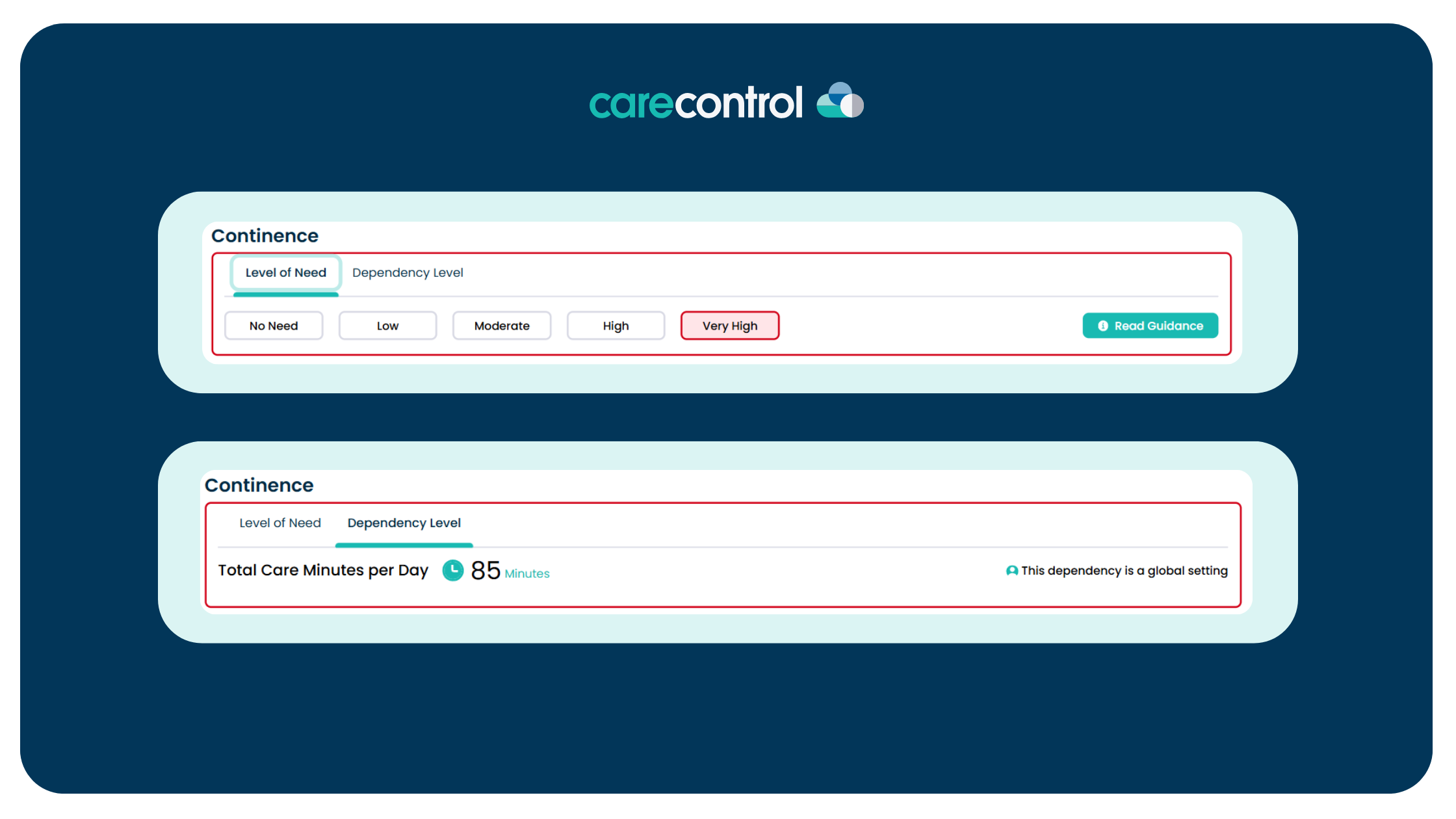
Dependency levels directly affect:
- staffing requirements,
- care hours,
- equipment usage,
- and operational costs.
Without clear dependency visibility, staffing can become inconsistent:
- some shifts may become overstaffed,
- while others may struggle to safely meet care demands.
Dependency-based planning allows providers to align staffing hours more accurately with resident needs.
This creates several benefits:
- safer staffing decisions,
- improved workforce planning,
- more balanced rotas,
- and better financial control.
Digital systems that combine dependency tracking with rota management can help providers identify whether staffing levels are running above or below required care hours.
This helps managers make proactive decisions before overspending occurs.
Reducing Unnecessary Agency Spending
Agency usage remains one of the biggest financial pressures across the care sector.
While agency support can sometimes be necessary, long-term reliance often creates:
- higher staffing costs,
- inconsistent care delivery,
- reduced continuity for residents,
- and additional management challenges.
By improving visibility across rotas, staffing hours and occupancy, providers can reduce avoidable agency usage through better workforce planning.
For example, digital rota systems can help managers:
- set staffing hour limits,
- monitor planned versus actual hours,
- identify overspending trends,
- and adjust staffing allocations earlier.
This level of control supports more sustainable staffing decisions while helping services maintain quality care delivery.
Using CRM Data to Improve Operational Visibility
Operational efficiency in care is about more than staffing alone.
Providers also need visibility across:
- room pricing,
- occupancy,
- equipment costs,
- funding arrangements,
- resident requirements,
- and service performance.
A care CRM system allows providers to centralise this information and build a clearer understanding of how their service operates financially.
This can support:
- occupancy management,
- budgeting decisions,
- funding discussions,
- financial forecasting,
- and long-term business planning.
When information is fragmented across spreadsheets or separate systems, decision-making becomes slower and less accurate.
Integrated digital systems help providers connect operational data together in one place, improving visibility across the entire service.
Funding Pressures Across Adult Social Care
Financial sustainability remains a major concern throughout the sector.
Many providers continue to face challenges around:
- local authority funding,
- rising wage costs,
- increasing resident complexity,
- inflation,
- and recruitment pressures.
In this environment, providers need access to accurate operational data more than ever before.
Without reliable visibility over costs and staffing requirements, it becomes difficult to:
- forecast budgets,
- justify funding needs,
- manage occupancy effectively,
- or plan sustainable growth.
Technology cannot solve every challenge facing adult social care, but it can provide the clarity and control providers need to make more informed decisions.
Building a More Sustainable Future for Care
The future of adult social care will depend heavily on smarter operational planning.
Providers need systems that support:
- efficient staffing,
- dependency-based care planning,
- occupancy management,
- financial visibility,
- and sustainable workforce decisions.
Care home staffing efficiency is ultimately about creating balance:
- supporting residents effectively,
- protecting staff wellbeing,
- and maintaining financial sustainability.
With the right digital tools and operational insights, providers can move away from reactive management and towards more confident, proactive decision-making.
As pressures across the sector continue to grow, having clear visibility across staffing, costs and care delivery will become increasingly essential for providers looking to thrive long-term.
Related Posts