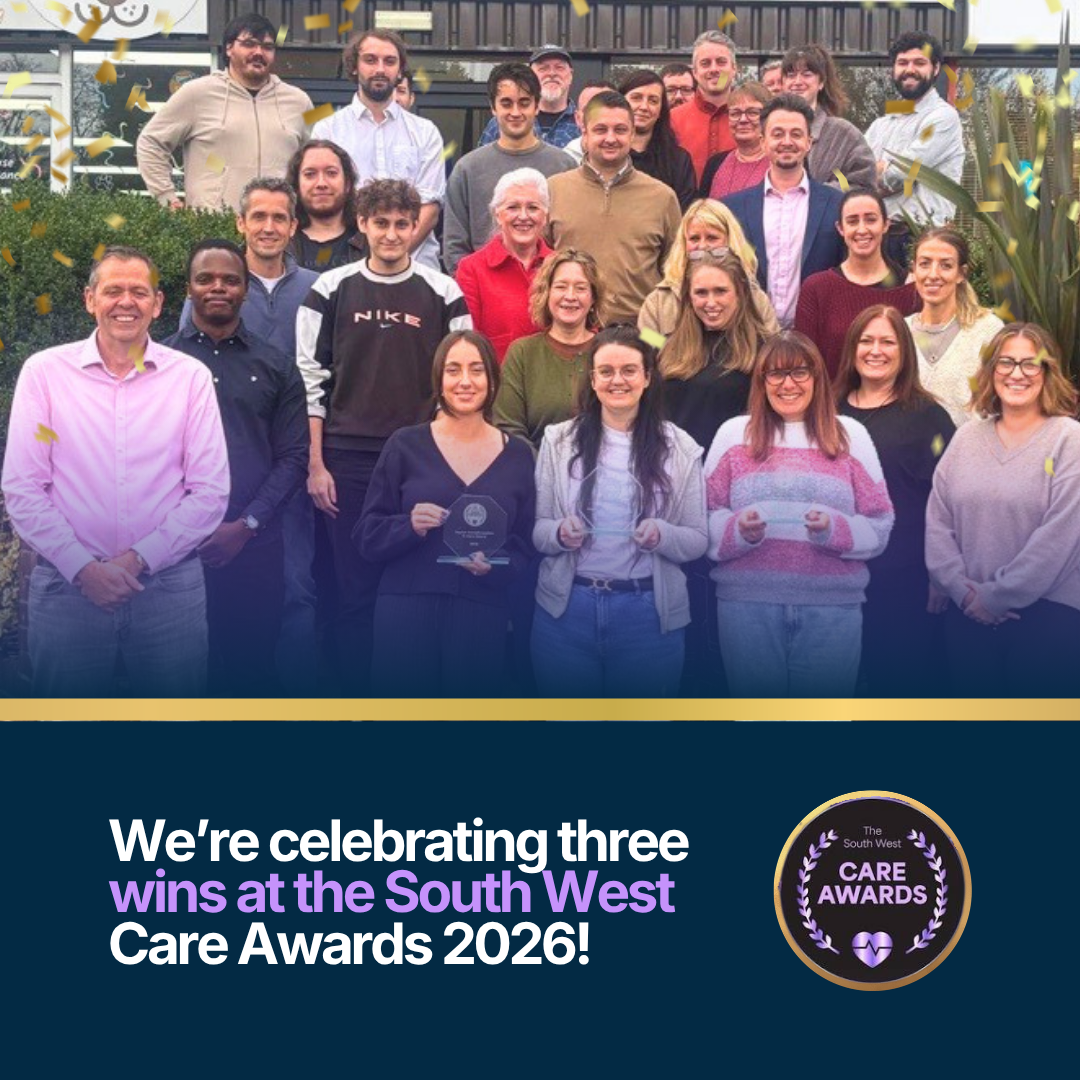
Some of the most useful ideas in care technology development don't begin in a development…
CQC State of Care 2025/26: Key Findings and How Technology Can Help Address the Challenges

The Care Quality Commission (CQC) has published its latest State of Care 2025/26 report, providing an important insight into the challenges, progress and changing landscape of adult social care across England.
From leadership and governance to workforce pressures, financial sustainability and the continued growth of community-based care, the findings highlight some of the complex challenges facing care providers.
But what do these findings mean for the sector, and where could technology play a role in helping providers respond?
At Care Control, we’ve taken a closer look at some of the key findings from the report, alongside our own perspective on how digital care management can support care leaders, strengthen operational oversight and help organisations navigate these challenges.
The findings discussed in this article are drawn from the CQC’s report. The discussion of technology and its potential benefits reflects Care Control’s perspective, rather than recommendations made by the CQC.
Good care is being delivered, but leadership remains under pressure
One of the report’s most interesting findings is the difference between the quality of care being delivered and the challenges surrounding leadership and governance.
Of the 3,783 care homes assessed under the CQC’s current assessment framework, 70% were rated good or outstanding overall.
However, 34% were rated requires improvement or inadequate for the well-led key question.
The CQC identified concerns around governance, management oversight, accountability and clarity of roles and responsibilities.
These findings highlight the increasing demands placed on those responsible for running care services.
Registered managers and senior leaders are expected to oversee everything from care quality and safeguarding to staffing, compliance, finance and operational performance.
And as organisations grow, maintaining visibility across these different responsibilities becomes increasingly complex.
Key findings from the CQC State of Care 2025/26
A snapshot of the challenges and changes across adult social care
34%
Below good for well-led
Of care homes assessed under the current CQC framework,
34% were rated requires improvement or inadequate for well-led.
55%
Governance shortfalls
Shortfalls were identified in 55% of care home assessments
examining governance, management and sustainability.
70%
Beds in larger homes
70% of available care home beds are now in homes
with 50 or more beds, compared with 59% in 2012.
20%
Supported living growth
Registered supported living services increased by 20%
in 2025/26, reaching more than 4,500 by April 2026.
Source:
CQC
Ratings relate to services assessed under the CQC's current framework. These assessments may not represent all care homes.
Ratings relate to services assessed under the CQC's current framework. These assessments may not represent all care homes.
So how can care leaders be better supported?
Strong leadership will always depend on people, culture and experience. But having access to accurate, timely information can make a meaningful difference.
Digital care management systems can help bring together information that might otherwise sit across different records, spreadsheets or disconnected platforms.
From care plan reviews and incidents to staffing, audits and quality assurance, having a clearer picture of what’s happening across a service can help managers identify concerns earlier, recognise improvements and make more informed decisions.
Technology cannot replace good leadership, but it can provide leaders with the tools and information they need to lead effectively.
34%
of assessed care homes were rated below good for well-led
The CQC identified concerns around governance,
management oversight, accountability and leadership
within assessed care homes.
Source:
CQC
Based on services assessed under the CQC's current framework.
Based on services assessed under the CQC's current framework.
A changing sector requires a different approach to care management
The structure of adult social care is changing, and the latest CQC findings highlight just how much the sector continues to evolve.
While the number of care homes has declined, larger care homes now account for a greater proportion of available beds. In fact, 70% of care home beds are now located in homes accommodating 50 or more people, compared with 59% in 2012.
Meanwhile, community-based care continues to expand.
The CQC reports that registered supported living services increased by 20% in 2025/26, reaching more than 4,500 services by April 2026. Homecare has also experienced significant growth, with registered services increasing by 42% between April 2019 and April 2026.
These changes reflect an evolving care landscape, with organisations operating across different settings, locations and models of support.
For care providers, this can bring additional operational complexity. Maintaining consistent processes, effective oversight and person-centred care becomes increasingly important as services grow and evolve.
This is where digital care management can play a supporting role.
By bringing care planning, workforce management, quality assurance and operational information together, technology can help organisations maintain consistency while giving individual services the flexibility to respond to the needs of the people they support.
The goal shouldn’t simply be to digitise existing processes, but to make those processes easier to manage, monitor and improve.
Workforce pressures remain a significant concern
Recruitment, retention and workforce development continue to be major challenges across adult social care.
Although vacancy and turnover rates have improved, the CQC warns that workforce stability remains a concern, particularly as international recruitment declines.
The report also highlights ongoing challenges around staff training and qualifications.
Behind these figures are providers working hard to recruit, develop and retain the people needed to deliver safe, high-quality care.
While technology cannot resolve workforce shortages, it can help organisations manage their existing teams more effectively.
Digital rostering, HR management, training records and workforce reporting can give managers clearer visibility of staffing requirements, qualifications, availability and absence.
Bringing this information together can also reduce the time spent managing separate administrative processes.
And in a sector where time is already stretched, finding ways to reduce unnecessary administration matters.
Financial sustainability and the importance of operational visibility
Financial pressures are another recurring theme throughout the report.
Increasing operating costs, funding challenges and changing patterns of care provision are creating an increasingly complex environment for providers.
The CQC also highlights the growing proportion of people funding their own care, particularly within residential care settings.
For care organisations, financial sustainability is closely connected to everyday operational decisions.
Staffing levels, agency usage, occupancy, care delivery costs and resource allocation can all influence financial performance.
Understanding how these areas interact is becoming increasingly important.
This is another area where connected digital systems can play a valuable role.
When workforce, care and financial information can be viewed together, providers have greater opportunities to understand operational trends, identify pressures and plan ahead.
It’s not simply about having more data. It’s about making existing information easier to understand and act upon.
Better information can support more joined-up care
The report also highlights the importance of stronger partnerships and better coordination between health and social care services.
Delays in assessments, care arrangements and hospital discharges continue to affect people’s experiences.
For people who had spent 14 days or more in hospital, the CQC reports that approximately one in eight delayed discharges in 2025/26 were associated with delays in completing transfers between hospitals and social care services.
While many of these challenges are linked to wider system pressures, effective communication and access to appropriate information remain important.
Digital care records and secure information-sharing capabilities can help professionals access relevant information, support continuity of care and reduce reliance on fragmented processes.
Importantly, technology should support collaboration between professionals, not introduce additional barriers.
Where does digital care management fit into the future?
The findings reinforce something we strongly believe at Care Control: digital care management should be about more than replacing paper records.
It should help care providers understand their organisations, support their teams and deliver high-quality, person-centred care.
As the sector grows and changes, care leaders need access to information that helps them understand what’s happening across their services.
That’s why we’ve developed Care Control as a connected care management platform, bringing together care planning, medication, workforce management, finance, quality assurance and operational reporting.
More recently, we’ve continued to explore how artificial intelligence can make that information more accessible and meaningful.
With CC Intelligence, our AI-powered mobile application, care leaders can access prioritised operational insights, helping them understand what needs attention, what’s changing and where improvements are being made.
For us, the opportunity isn’t about adding more technology for the sake of it.
It’s about making the information care organisations already hold more useful to the people responsible for running them.
Care Control's perspective: Where could technology help?
The CQC's findings highlight challenges facing adult social care.
At Care Control, we believe digital technology can support providers
in responding to some of these pressures.
- Leadership and governance: Digital audits and operational reporting can support management oversight and help identify areas requiring attention.
- Connected care operations: Bringing together care planning, HR, finance and compliance information can reduce fragmented administration.
- Workforce management: Digital rostering, training records and reporting can help managers understand staffing requirements and workforce risks.
- Operational visibility: Accessible management information can help care leaders identify trends and make better-informed decisions.
Technology alone cannot solve the challenges facing adult social care.
However, when developed around the needs of care providers, it can
provide valuable support to the people delivering and managing care.
Care Control's interpretation of findings published by
CQC.
This commentary is not a CQC recommendation or endorsement.
Looking ahead: Supporting the people behind care
The CQC’s State of Care 2025/26 report paints a picture of a sector demonstrating resilience and commitment, but one facing significant and evolving challenges.
It also provides an important reminder that delivering high-quality care depends on more than what happens at the point of care.
It depends on strong leadership, supported workforces, sustainable organisations, effective communication and systems that enable people to do their jobs well.
Technology alone will never solve the challenges facing adult social care.
But when developed around the real needs of care providers, it can help remove barriers, improve visibility and give care professionals more time to focus on what matters.
As we look towards 2027, perhaps the most important question isn’t simply how we encourage greater digital adoption across adult social care, but how we ensure technology genuinely helps the people delivering and managing care every day.
Because ultimately, better technology should support better care.
This article reflects Care Control’s interpretation of the findings published in the Care Quality Commission’s State of Care 2025/26 report. The ratings discussed relate to services assessed under the CQC’s current framework and should not be interpreted as representative of every care service in England.
Source: CQC – The State of Health Care and Adult Social Care in England 2025/26
Related Posts