I'd replace the opening with: Managing multiple care services brings a different level of complexity…
What Makes an Effective Home Care Rota in Domiciliary Care?

Delivering consistent domiciliary care starts with a clear, efficient rota that keeps staff, visits and communication aligned.
Managing a home care rota is one of the most important operational responsibilities for domiciliary care providers. A well-structured rota ensures carers arrive on time, clients receive consistent and reliable support, and managers maintain clear visibility over staffing and the care being delivered, especially when supported by a domiciliary care rota system.
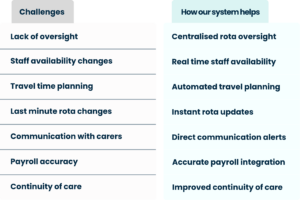
However, building an effective rota is rarely simple. Care providers must balance staff availability, travel time, client needs and last-minute changes, all while maintaining compliance and delivering high quality care.
In this article, Care Control explores why rota management is so important in domiciliary care, the common challenges providers face when scheduling staff, and how digital rota software can support more efficient scheduling.
When rota management sits alongside staff availability, contracts, working hours, payroll and care planning within a single connected system, providers gain the clarity and control they need to manage their service with confidence.
Why Domiciliary Rota Management Matters
Unlike residential care settings, domiciliary care requires staff to travel between multiple client visits throughout the day. This makes scheduling significantly more complex, as several operational factors must be considered when building a rota.
A well-planned home care rota helps ensure visits happen on time, reduces unnecessary travel between appointments, supports continuity of care and helps prevent staff burnout. It also allows care coordinators to respond quickly when unexpected changes occur.
Poor rota management can quickly lead to operational challenges such as missed visits, rushed care or increased pressure on staff, both in the office and out in the community.
As demand for home care services continues to grow, providers need systems that allow them to manage rotas efficiently while maintaining flexibility.
Common Challenges in Domiciliary Care Scheduling
Creating a rota for home care involves far more than assigning shifts. Care coordinators must consider several operational factors to ensure visits run smoothly and staff workloads remain manageable.
One of the biggest challenges is managing staff availability. Many carers work flexible or part time hours, meaning their availability can change regularly. Without clear visibility of staff schedules it becomes difficult to allocate visits efficiently. For guidance, see creating an availability rota.
Travel time is another major factor. Poorly planned rotas can result in carers travelling long distances between visits, which reduces efficiency and increases operational costs.
Many providers also experience peak demand during what is often referred to as the morning golden hour. This typically occurs between 8am and 9am when many clients require support at the same time.
Care services must also regularly respond to unexpected changes such as staff sickness, emergency visits, hospital discharges or client cancellations. Without flexible scheduling processes these disruptions can affect the entire rota.
A connected system allows all rota information to sit alongside staff records, travel planning and payroll. This creates a more reliable and efficient scheduling process for both coordinators and care teams.
What Makes a Good Home Care Rota
Successful rota management relies on clear planning, effective communication and the right systems to support daily operations. For further insight, see what does a good rota look like in the care sector.
Continuity of care should always remain a priority. Whenever possible, clients benefit from seeing familiar carers who understand their preferences and support needs.
Balanced workloads are also important. Care coordinators must ensure staff are not overloaded with too many visits or unrealistic travel expectations, as this can impact both staff wellbeing and the quality of care delivered.
Accurate visit scheduling is another key factor. Each visit should consider the client’s care requirements, visit duration, travel time between appointments and the appropriate skills required from the carer.
Clear communication is equally important. Carers should be able to access their schedules easily and receive updates when changes occur.
Best Practices for Building an Effective Rota
There are several practical strategies care providers can use to improve rota management.
Planning rotas in advance allows coordinators to identify staffing gaps early and avoid last minute disruption.
Maintaining up to date records of staff availability helps prevent scheduling conflicts and ensures carers are only assigned visits they are able to attend.
Grouping visits geographically can significantly reduce travel time and improve efficiency, allowing carers to spend more time delivering care rather than travelling between appointments.
It is also important to build flexibility into the rota. Unexpected changes are inevitable in care services, so having the ability to adjust schedules quickly is essential.
How Digital Rota Software Can Help
Many care providers still rely on spreadsheets, paper rotas or disconnected systems to manage scheduling. While these methods can work for smaller teams, they often become difficult to manage as organisations grow.
Digital rota software allows providers to build schedules more efficiently while maintaining a clear overview of staff availability, client visits and travel planning. Solutions such as Care Control’s domiciliary care rota software support this approach.
With the right system in place, care teams can update rotas quickly, communicate changes instantly and monitor visits in real time. This reduces administrative pressure on coordinators and helps ensure visits are delivered reliably.
When rota information connects with other operational systems such as staff records, care planning and payroll, providers can reduce administrative workload and improve accuracy across the organisation.
How Care Control Supports Home Care Rota Management
Care Control’s domiciliary rota software is designed specifically for home care providers. The platform helps teams build efficient schedules while maintaining full visibility across staff availability, client visits and travel planning.
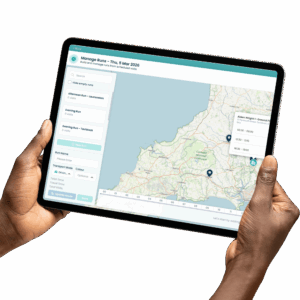
Using Care Control, providers can plan community runs that reduce travel time, assign carers to visits quickly and adjust schedules as services change.
Because the rota sits within the wider Care Control platform, scheduling connects directly with other essential operational information. Staff availability, working hours, payroll and care planning all work together within one system.
This gives providers the clarity and confidence they need to manage rotas more effectively while maintaining consistent care delivery.
Care Control is also NHS Assured, providing reassurance that the platform meets recognised standards for security, interoperability and reliability. Learn more about NHS Assured solutions and working with a fully compliant NHS Assured supplier.
The Future of Home Care Scheduling
As demand for domiciliary care continues to increase, efficient workforce planning will become even more important. Providers need systems that allow them to manage rotas dynamically while maintaining high standards of care.
By combining strong operational planning with modern rota software, organisations can improve efficiency, reduce administrative workload and deliver better outcomes for the people they support.
A well managed rota is not just a scheduling tool. It is the foundation that allows care providers to deliver consistent, high quality care every day. To see how this works in practice, you can book a demonstration.
Related Posts