I'd replace the opening with: Managing multiple care services brings a different level of complexity…
AI Can Do a Lot. But It Can’t Care.
AI can write.
It can analyse.
It can search through huge amounts of information in seconds.
It can identify patterns that might take a person considerably longer to find.
It can help with reporting, administration and countless everyday tasks.
But it can’t care.
And as artificial intelligence becomes a bigger part of the conversation across social care, we think that distinction matters.
The question shouldn’t be whether AI can replace the people working in care.
It should be:
What can we give technology, so our people have more time for the things only they can do?
Because there are plenty of jobs we’d happily hand over to AI.
The human stuff isn’t one of them.
Some things should stay human
Care isn’t just a collection of tasks that need completing.
It’s noticing somebody isn’t quite themselves today.
It’s knowing how someone likes their morning to begin.
It’s a conversation with a worried family member.
It’s a Registered Manager knowing their team well enough to recognise when somebody needs support.
It’s experience.
Judgement.
Trust.
Humour.
Empathy.
And all the tiny interactions that probably won’t ever appear on a report but can make an enormous difference to someone’s day.
Technology can’t replicate that.
Nor do we think it should try.
So while there’s understandably a lot of excitement around what AI could mean for social care, we’re more interested in where it can genuinely be useful.
And there are plenty of opportunities.
Give AI the jobs it can actually help with
Ask a care professional which part of their job they’d like more time for and we’re fairly confident nobody is going to say:
“I’d love to spend another afternoon working through reports.”
There are necessary parts of running a care service that take time.
Information needs recording.
Reports need producing.
Managers need oversight.
Questions need answering.
Records need reviewing.
Patterns need identifying.
And sometimes the information you need is already there – you just have to find it.
These are the areas where technology can start doing more of the heavy lifting.
If AI can help somebody produce a report faster, brilliant.
If it can help find information without someone manually searching for it, even better.
If it can analyse large amounts of operational information and highlight something a manager might want to investigate, that’s useful.
Because every unnecessary task we can simplify gives somebody a little bit of time and attention back.
And in care, both are valuable.
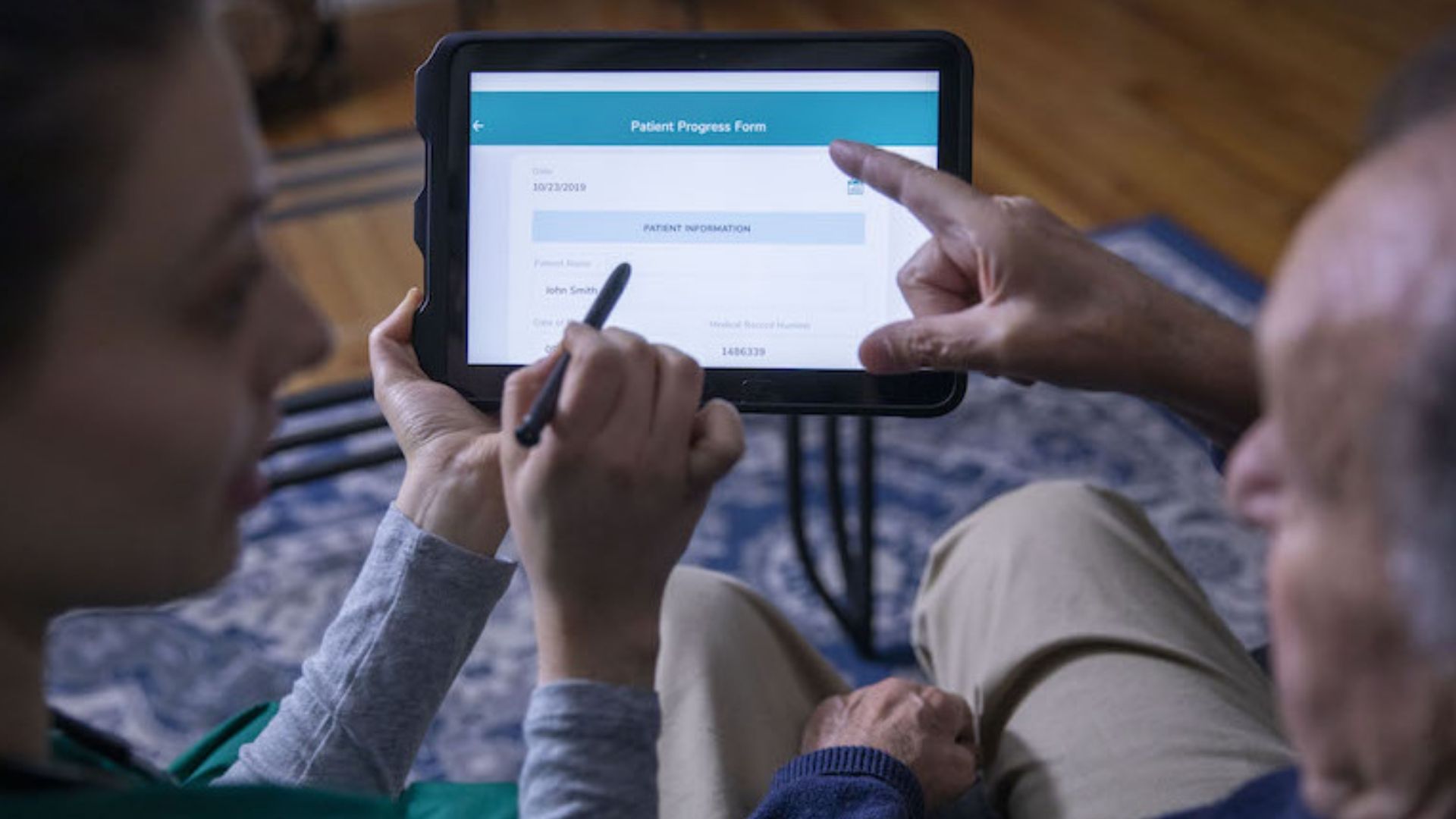
That’s what we’re trying to do with Margo
You might have met Margo AI already.
She’s been appearing increasingly often across Care Control – and, judging by some of our September content, developing quite the personality while she’s at it.
But behind Margo is a very deliberate idea.
What if AI could take some of the friction out of using care technology?
Margo has been designed specifically for social care and can support Care Control users with tasks including reporting, typing assistance and helping them find and understand information.
You can ask.
Explore.
Understand.
And get to the information you need without always having to work through it manually.
Margo isn’t there because we wanted to put an AI sticker on Care Control.
She’s there because there are things AI is genuinely good at.
And if those things happen to be jobs that currently take time away from care professionals?
That’s where it starts getting interesting.
AI can find the pattern. People understand the story.
This becomes even more important as care organisations grow.
A person can only review so much information at once.
Technology doesn’t have the same limitation.
That’s part of the thinking behind CC Intelligence, which we introduced this September.
Powered by Margo AI, CC Intelligence can analyse operational information already held within Care Control and help identify trends, priorities and areas that may deserve attention.
But here’s the important part:
It doesn’t make the care decision.
Imagine CC Intelligence highlights a developing pattern within a service.
Technology has done its job.
It’s found something.
What happens next belongs to people.
A manager can investigate.
They can talk to their team.
They can consider what’s happening within the service.
They can use their experience and professional judgement to decide whether action is required.
AI can help find the pattern.
People understand the story behind it.
That’s the relationship between people and AI that we want to build.

We don’t want AI running your care service
This is perhaps where some conversations about AI become unnecessarily dramatic.
The future doesn’t have to be humans versus machines.
Particularly not in care.
There are things technology is incredibly good at and things people are infinitely better at.
So use both accordingly.
Let technology process.
Let it organise.
Let it search.
Let it analyse.
Let it take some of the repetitive work.
Then let people do what people do best.
Lead.
Investigate.
Listen.
Support.
Reassure.
Make decisions.
Care.
That’s not AI replacing somebody’s role.
It’s AI supporting them within it.
The best AI might be the stuff you barely notice
When people imagine the future of AI, it’s easy to think about huge, transformational changes.
But some of the most useful technology is much less dramatic.
It’s finishing something in five minutes that used to take twenty.
It’s finding the information you need without digging for it.
It’s not building the same spreadsheet again.
It’s having assistance when writing something.
It’s asking a question instead of navigating through several different places looking for the answer.
It’s being pointed towards something that deserves your attention.
Nobody is going to make a science-fiction film about saving fifteen minutes on a report.
But if technology can repeatedly give those minutes back to thousands of people working across social care?
That matters.
So, what should we actually expect from AI in social care?
As AI becomes more common across the sector, simply saying that software “uses AI” won’t be enough.
Care providers should be asking what it actually contributes.
Does it solve a real problem?
Does it reduce repetitive work?
Does it make something easier to understand?
Does it support the people using it?
Does it work alongside professional judgement?
Does it give somebody time back?
And perhaps most importantly:
Does it make delivering or managing care easier without getting in the way of care itself?
Because technology should never become the main character here.
The people providing and receiving care are.
Come and meet the humans. And Margo.
There’s only so much we can say about all of this from behind a screen.
So we’re taking it to Birmingham.
On 7–8 October 2026, Care Control will be at Care Show Birmingham.
We’ll be bringing the team.
We’ll be bringing Care Control.
We’ll be bringing CC Intelligence.
And yes, Margo is coming too.
You’ll be able to get hands-on with Care Control, see what we’ve been building and experience how we’re using AI within our technology.
But we’re equally interested in hearing from you.
Care Show gives us the chance to have the conversations we can’t get from a dataset.
What’s actually happening inside your service?
What’s taking too much time?
What frustrates your team?
What do you wish your technology did differently?
And what’s your “wouldn’t it be good if…”?
Those conversations influence where technology goes next.
Which, when you think about it, rather proves our point.
AI can give us information. People give it meaning.
Technology should give people more time to be people
AI is going to become more capable.
Care technology is going to become more intelligent.
We’ll be able to analyse more information, automate more tasks and find entirely new ways to support care organisations.
We’re excited about that.
But we also know where the line is.
Margo can help with your reporting.
She can help you write.
She can help you find information.
She can help make sense of what’s happening across your Care Control system.
With CC Intelligence, she can even help leaders identify what might need their attention.
But she can’t sit with someone who’s having a difficult day.
She can’t know your team like you do.
She can’t replace experience, judgement or human connection.
And she definitely can’t make you a decent brew.
AI can do a lot.
But the caring? We’ll leave that to you.
Meet Care Control at Care Show Birmingham
Join us at Care Show Birmingham on 7–8 October 2026 to meet the Care Control team, meet Margo and see CC Intelligence in action.
Come for the technology. Stay for the conversations.
We’ll see you in Birmingham.
FAQ (Frequently Asked Questions)
How is AI being used in social care?
AI can support social care teams by helping with tasks such as reporting, analysing information, identifying patterns, drafting content and finding relevant information more quickly. The aim should be to reduce unnecessary administrative work and support care professionals, rather than replace their expertise or judgement.
What is CC Intelligence?
CC Intelligence is Care Control’s AI-powered care management intelligence solution. It uses Margo AI to analyse operational information within Care Control and provide personalised briefings, critical alerts and intelligent insights to support better oversight.
Will AI replace care workers?
AI cannot replace the human relationships, empathy, experience and professional judgement at the heart of good care. Instead, AI can support care professionals by taking on appropriate administrative and information-based tasks, giving people more time to focus on the parts of care that require a human.
What is the difference between Margo AI and CC Intelligence?
Margo AI is Care Control’s AI assistant and supports users with tasks such as reporting, typing assistance and exploring information. CC Intelligence is an intelligence layer within Care Control, powered by Margo AI, which analyses operational information to help care leaders identify trends, priorities and areas that may require attention.
Both are designed to support care professionals and make existing information more useful – not replace human decision-making.
Can I see Care Control's AI technology at Care Show Birmingham?
Yes. Care Control will be at Care Show Birmingham on 7–8 October 2026, where visitors will be able to meet the team, meet Margo and see CC Intelligence and Care Control in action.
It’s also an opportunity to talk to us about the challenges facing your service, see the technology first-hand and ask us how Care Control could support your organisation
Related Posts